If you’re wondering how to dispose of medical waste at home, you’re asking a very important question. Improper disposal can lead to serious risks—injuries, infections, environmental contamination, and even legal issues in some areas.
Many people assume that all household medical waste can go into regular trash, but that’s not true. Different types of waste—like needles, medicines, or contaminated items—require specific handling.
In this guide, I’ll walk you through exactly what you should do step by step, so you can dispose of medical waste safely and responsibly.
Key Takeaways (Quick Summary)
- You should never throw sharps like needles directly into the trash
- You should use authorized take-back programs for medicines
- You should seal and handle infectious waste carefully
- You should follow special rules for chemotherapy or hazardous waste
- You should always check local disposal regulations
Why Proper Medical Waste Disposal at Home Is Important
Medical waste is not like regular household waste. It can contain harmful pathogens, sharp objects, or toxic chemicals.
According to the U.S. Food and Drug Administration, improper disposal of medical waste can cause injuries, spread infections, and contaminate water systems.
For example, loose needles can injure sanitation workers, and flushing medicines can pollute water supplies.
That’s why you should always follow safe disposal methods.
1. How You Should Dispose of Sharp Objects (Needles, Syringes, Lancets)
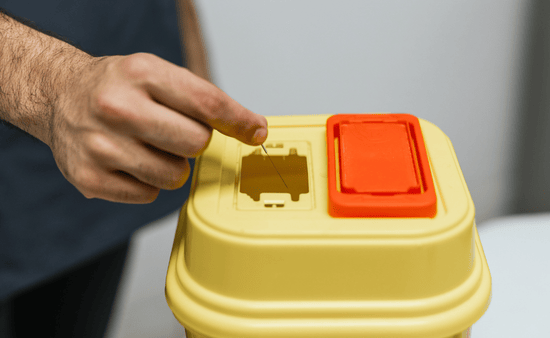
Sharps are one of the most dangerous types of medical waste. You should never throw them loosely in the trash or flush them down the toilet.
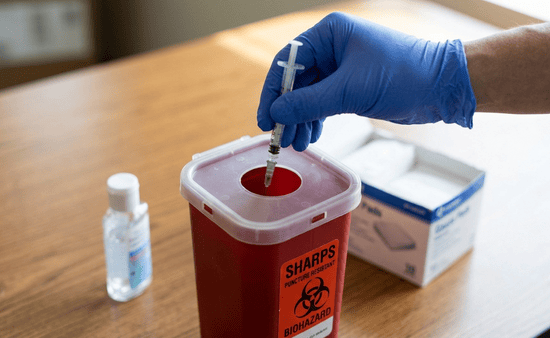
The safest method is to place them immediately in an FDA-approved sharps container after use. These containers are puncture-resistant and designed to prevent injuries.
If you don’t have a sharps container, you should use a strong household alternative like a thick plastic detergent bottle with a tight lid. Make sure you label it clearly as “SHARPS – DO NOT RECYCLE.”
Once the container is full, you should not throw it in regular garbage. Instead, you should take it to authorized drop-off locations such as hospitals, clinics, pharmacies, or hazardous waste facilities.
Some areas also offer mail-back programs or residential pickup services. These options make it easier to dispose of sharps safely without risk.
2. How You Should Dispose of Unused or Expired Medications
Throwing medicines in the trash or flushing them down the toilet can harm the environment.
The best option is to use medicine take-back programs. Many pharmacies, hospitals, and even police stations have drop boxes where you can safely dispose of medications.
If a take-back option is not available, you should follow a safe at-home method. You should mix the medication (without crushing tablets) with an unappealing substance like coffee grounds or cat litter. Then, place the mixture in a sealed bag or container before putting it in the trash.
Before disposing of empty medicine bottles, you should remove or scratch out personal information to protect your privacy.
Flushing medicines should only be done if they are listed on official safety guidelines and require immediate disposal.
3. How You Should Handle Non-Sharp Infectious Waste
Non-sharp medical waste includes items like used bandages, gauze, gloves, and tubing contaminated with blood or bodily fluids.
You should never place these items directly into the trash without proper packaging. Instead, you should double-bag them using strong plastic bags and seal them tightly.
Once properly sealed, these items can usually be placed in your household garbage, but not in recycling bins.
This step is important to prevent exposure to harmful pathogens.
4. How You Should Dispose of Chemotherapy and Hazardous Medical Waste
Some types of medical waste require extra caution.
Waste from chemotherapy or radioactive treatments can be highly hazardous. This may include drug containers, gloves, or even bodily waste.
You should never dispose of these materials without guidance. Instead, you should contact your healthcare provider or the medical team handling your treatment.
They will give you specific instructions on how to store and dispose of these materials safely.
5. Additional Types of Medical Waste You Should Handle Carefully
There are other common items that people often overlook.
Used masks, test kits, and personal protective equipment should be disposed of carefully, especially if contaminated. You should seal them in bags before placing them in the trash.
Thermometers, especially those containing mercury, should not be thrown away casually. You should take them to hazardous waste facilities.
Inhalers and aerosol cans may also require special disposal due to pressurized contents.
Being aware of these items helps you manage medical waste more safely.
6. Safety Tips You Should Always Follow
Before disposing of any medical waste, you should take basic safety precautions.
You should always wash your hands after handling medical waste. If possible, you should wear gloves when dealing with potentially infectious materials.
You should never try to open or break medical items like needles or containers. This increases the risk of injury and contamination.
Keeping waste out of reach of children and pets is also important.
These small precautions can prevent serious accidents.
7. Common Mistakes You Should Avoid
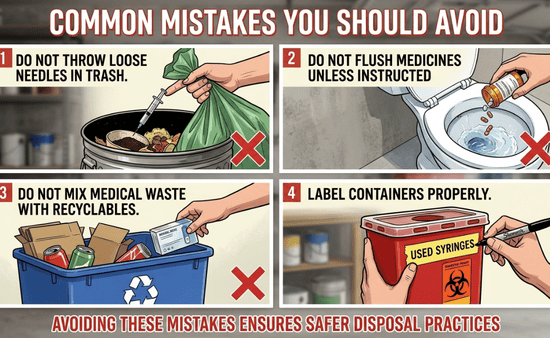
Many people make simple mistakes that can lead to serious consequences.
You should never throw loose needles into the trash. You should not flush medicines unless specifically instructed. You should avoid mixing medical waste with regular recyclables.
Another common mistake is not labeling containers properly, which can confuse waste handlers and increase risk.
Avoiding these mistakes ensures safer disposal practices.
8. How to Check Local Medical Waste Disposal Rules
Medical waste regulations can vary depending on your location.
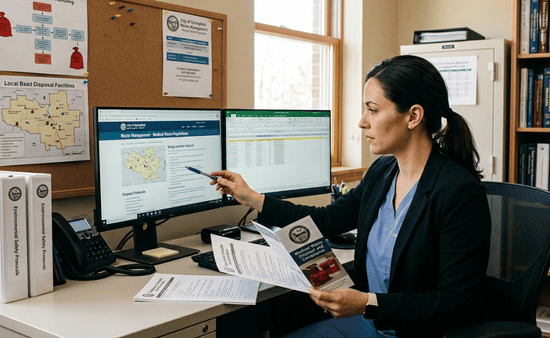
You should always check your local government or municipal waste management website for specific guidelines. Some areas have dedicated collection programs, while others have strict rules for disposal.
Following local regulations ensures compliance and safe handling.
9. Benefits of Proper Medical Waste Disposal
When you dispose of medical waste correctly, you protect both people and the environment.
You reduce the risk of injuries and infections, prevent harmful chemicals from entering water systems, and ensure safe waste handling for sanitation workers.
Proper disposal also helps maintain hygiene in your home and community.
Frequently Asked Questions
1. How should you dispose of medical waste at home?
You should separate waste types, use proper containers, and follow authorized disposal methods.
2. Can you throw needles in regular trash?
No, you should place them in a sharps container and take them to a designated disposal site.
3. What is the safest way to dispose of medicines?
You should use take-back programs or mix them with unwanted substances before placing them in sealed trash.
4. Can you recycle medical waste?
No, most medical waste should never be placed in recycling bins.
5. Why is proper medical waste disposal important?
It prevents injuries, infections, and environmental contamination.
Build Safe Disposal Habits at Home
Learning how to dispose of medical waste at home is not complicated, but it requires awareness and consistency.
You should develop simple habits like using proper containers, separating waste types, and using authorized disposal methods.
Over time, these habits become routine and significantly reduce risks.
The goal is not just disposal—it’s safe and responsible handling.