Beautiful outdoor spaces do not have to be high-demand outdoor spaces. The best landscapes are not the ones that need constant rescue; they are the ones designed to look intentional through changing seasons, weather stress, and ordinary use.
When it comes to Utah landscaping, that distinction matters even more because the climate rewards durable materials, efficient planting, and smart design choices.
For homeowners, the goal is rarely to eliminate care entirely. It is to reduce unnecessary work without sacrificing curb appeal.
That means choosing features that hold their structure, keep their visual balance, and age well instead of demanding frequent replacement, trimming, watering, or repair. Cottonwood Landscapes has built its reputation around that kind of thinking, pairing aesthetic design with long-term performance.
The Real Problem: Too Many Landscapes Are Designed for the First Season, Not the Fifth
A landscape can look impressive at installation and still become frustrating within a year or two. That usually happens when the design relies too heavily on high-water turf, fragile ornamentals, or materials that do not tolerate local conditions well. In practice, the issue is not beauty versus maintenance. It is short-term beauty versus enduring design.
In Utah, a landscape faces more than visual demands. It has to work through freeze-thaw cycles, dry stretches, soil movement, sun exposure, and seasonal temperature swings. If a feature cannot handle those pressures, maintenance rises quickly. The homeowner may end up spending more time replacing plants, adjusting irrigation, or repairing surfaces than enjoying the space.
Cottonwood Landscapes approaches this differently. With more than 35 years of professional experience along the Wasatch Front, the company designs outdoor environments around durability first and style second only in the sense that the two should support each other. That is the standard that separates a polished yard from a manageable one.
Why Maintenance Often Starts in the Design Phase
Maintenance is usually not a surprise cost. It is a design outcome. A yard with the wrong plant palette, poor drainage, or complicated edging will require ongoing correction. By contrast, a well-planned yard uses material selection and layout to prevent problems before they start. Good soil practices, including composting at home, can also support healthier planting beds.
That is especially important in semi-arid regions, where water use, soil behavior, and plant survival are all closely linked. Cottonwood Landscapes leans into that reality by building with regional conditions in mind, rather than trying to impose a generic suburban landscape model on a climate that does not support it.
Beauty That Holds Up: The Features That Carry the Most Value
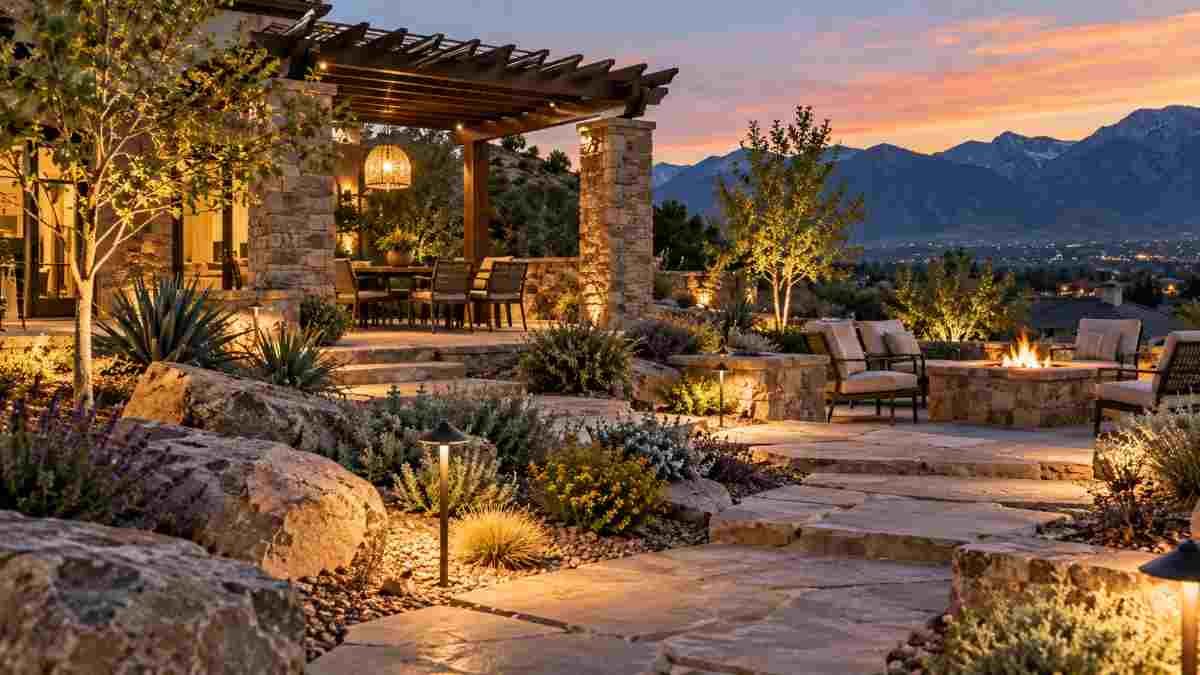
Some landscape features do more than look good at installation. They continue to provide structure, texture, and function with relatively modest upkeep. These are the elements that tend to deliver the best long-term return for homeowners who want attractive outdoor spaces without constant maintenance burdens.
A few of the most effective options include:
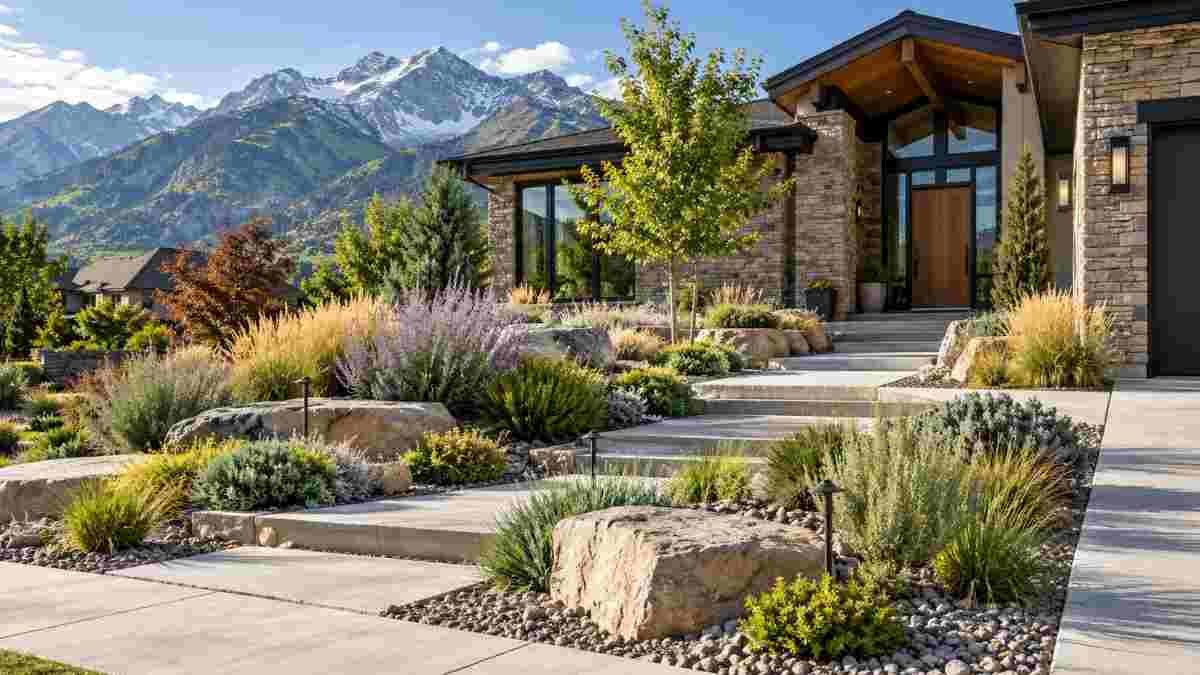
- Drought-tolerant xeriscaping that reduces dependence on thirsty lawn areas
- Native and climate-hardy plantings that are adapted to local conditions
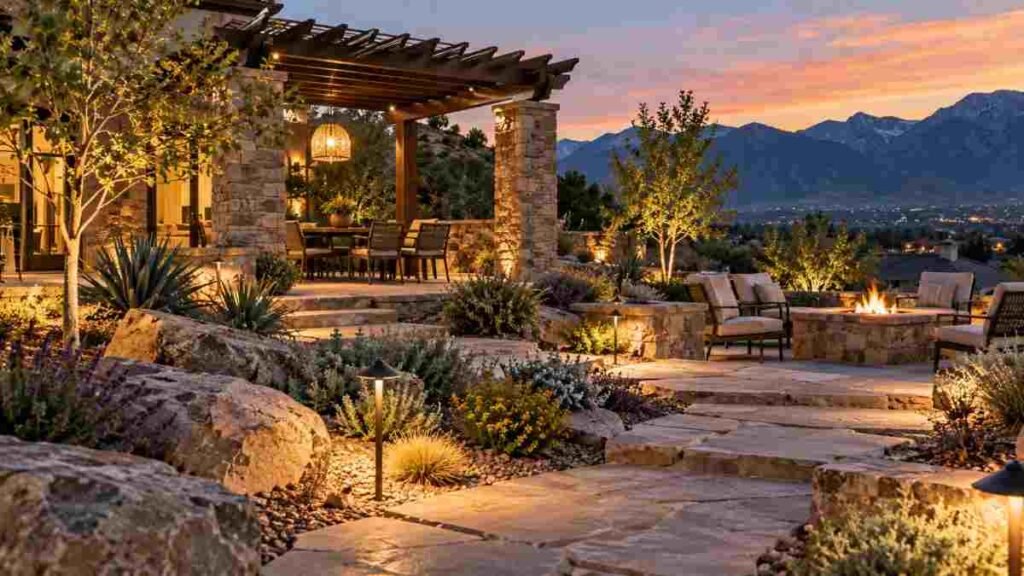
- Paver patios and flagstone walkways that create usable space and visual order
- Retaining walls that solve grade changes while adding architectural definition
- Pergolas and fire pits that function as focal points with low day-to-day care
- Low-voltage LED lighting that improves safety and atmosphere without much upkeep
These features work because they shift the landscape away from labor-intensive surfaces and toward durable form. A carefully built stone patio, for example, does not ask for mowing, fertilizing, or constant replanting. It creates a strong visual anchor that stays consistent season after season.
Xeriscaping That Still Feels Refined
Xeriscaping is often misunderstood as a sparse or purely practical approach. In reality, it can be highly polished when it is designed well. The strongest versions use layered textures, restrained color palettes, and thoughtfully placed plant masses to create a landscape that feels complete rather than stripped down.
The key is selectivity. Not every dry-tolerant plant belongs in every yard, and not every open area should be filled. Strong xeriscaping uses negative space intentionally. Routine care can also include natural ways to kill weeds around planting areas. It also reduces irrigation demand, which matters in a semi-arid climate where overwatering can be as problematic as underwatering.
Cottonwood Landscapes designs xeriscaping and regional plantings specifically adapted to thrive in these conditions, which is why the result can feel elevated rather than improvised.
Hardscaping as the Backbone of Low-Maintenance Design
Hardscaping often does the quiet heavy lifting in a landscape. Paver patios, flagstone walkways, and retaining walls create usable structure while reducing reliance on plant material alone. They also bring year-round form to a space, which means the landscape continues to look composed even when plants are dormant.
The advantage is not just visual. Properly installed hardscaping can resist local freeze-thaw cycles and soil movement better than less durable alternatives. That matters in Utah, where materials need to be chosen not only for style but also for their ability to remain stable through changing conditions.
This is one reason Cottonwood Landscapes emphasizes engineering and craftsmanship alongside design. The point is to build features that look good now and still make sense years later.
What Strong Operators Prioritize When They Want Less Upkeep
A truly low-maintenance landscape is rarely created by one big decision. It is the result of many smaller choices that reinforce each other. The most effective landscapes reduce complexity at the root level rather than masking it with frequent labor.
Strong operators usually focus on a few principles:
- Limit lawn area where it does not serve a real functional purpose.
- Use plants that match sun, water, and soil conditions instead of fighting them.
- Favor stone, masonry, and other stable materials for the most visible surfaces.
- Keep irrigation efficient and targeted rather than broad and wasteful.
- Design with clear edges so beds, walkways, and seating areas remain easy to manage.
- Build focal points into the structure of the space so the yard does not depend on constant seasonal color to feel finished.
This approach works because it simplifies how the landscape performs. Instead of asking the homeowner to maintain many fragile details, the design itself does more of the visual work.
The Role of Lighting, Shade, and Outdoor Rooms in a Practical Landscape
A low-maintenance landscape should do more than reduce chores. It should improve how the property is used. That is where elements like pergolas, fire pits, and low-voltage LED lighting become especially valuable. They add dimension, usability, and atmosphere without introducing much ongoing upkeep.
Low-voltage LED lighting, in particular, is one of the most efficient ways to improve nighttime curb appeal. Thoughtful landscaping can also make your house look expensive from the street. It highlights architecture, improves safety, and helps a yard feel finished after dark. Because the system is low-maintenance compared with many decorative alternatives, it adds value without becoming another recurring task.
Pergolas and fire pits serve a similar purpose. They create gathering points and visual anchors, which reduces the need for a landscape to rely on dense planting beds to feel complete. In other words, the space becomes more functional and more elegant at the same time.
Why Cottonwood Landscapes Is Built for This Kind of Work
Not every landscaping company is equally suited to this conversation. Designing for beauty is one skill. Designing for beauty that survives Utah conditions with manageable upkeep is another. Cottonwood Landscapes stands out because it combines design-and-build capability with regional knowledge and long-term thinking.
The company’s experience across the Wasatch Front, Salt Lake Valley, and surrounding areas matters because local landscapes are shaped by specific soil, climate, and weather challenges. Cottonwood Landscapes does not treat those factors as obstacles to work around later. They are part of the design brief from the beginning.
That is also why the firm’s work in hardscaping, softscaping, irrigation efficiency, and durable outdoor structures feels cohesive. The landscape is not assembled feature by feature.
The Long-Term Payoff Is Simpler Than Most People Expect
The most successful landscapes usually are not the most complicated ones. They are the ones that use restraint wisely. A durable patio, a well-chosen plant palette, a clean walkway, and a few carefully placed focal points can outperform a more crowded design that demands constant attention.
That is the real promise of thoughtful landscaping in Utah. It is not about creating a yard that never needs care. It is about creating a yard that rewards care with lasting structure rather than punishing you with endless upkeep. When the right materials, plants, and layout work together, the landscape becomes easier to live with and better to look at over time.
Cottonwood Landscapes understands that balance. And for homeowners who want beauty without unnecessary maintenance, that balance is the whole point.